
Quick Answer: Most dental implant treatment in Manhattan takes about 3 to 9 months from consultation to final crown. Your timeline depends on bone health, gum condition, and whether you need an extraction or bone graft first. Common steps include 3D imaging, implant placement, healing, and crown placement. Careful planning up front protects long-term success.
More Manhattan adults are choosing implants over bridges and removable dentures, and the reason is easy to understand. An implant replaces the root as well as the visible tooth, so it stays firmly in place, helps protect the jawbone, and does not depend on neighboring teeth for support. For busy New Yorkers, that means eating, speaking, and smiling without a second thought.
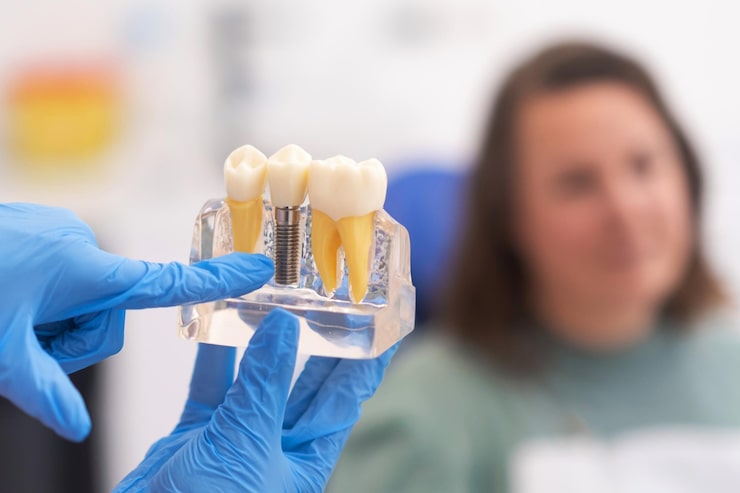
A dental implant is a small titanium or zirconia post placed in the jawbone to act as an artificial tooth root, which then supports a custom crown, bridge, or denture that looks and works like a natural tooth.
This guide explains who qualifies, which types are available, every step of treatment, recovery, risks, and what dental implant cost in New York looks like in 2026. Medically reviewed, Central Park West Dental Studio.
Key Takeaways
- What implants are: A post in the jawbone plus a custom crown. They suit most healthy adults with enough bone and healthy gums.
- Typical timeline: About 3 to 9 months from consultation to final crown. Bone grafting or a sinus lift can add several months.
- Cost in Manhattan: Published market figures for a complete single implant in New York run roughly $4,600 to $7,100, and your total depends on grafting, sedation, and materials. [Practice to insert its verified range.]
- Success and longevity: Long-term studies report survival rates of roughly 95% to 99% at 10 years or more, and implants can last decades with good care.
- Before you choose a provider: Ask about 3D imaging, who places and restores the implant, a written fee breakdown, and the warranty.
What Are Dental Implants?
A dental implant is a titanium or zirconia post placed in the jawbone to act as an artificial tooth root. After the bone heals around it, the post holds a custom-made crown that matches your natural teeth in shape, size, and color. It is the closest option to a natural tooth that dentistry offers today.
The Three Parts of an Implant
Every single-tooth implant has three components:
- The implant post. This is the screw-shaped root, placed in the jawbone. It is usually made of medical-grade titanium or zirconia.
- The abutment. This small connector attaches to the post and sits at the gum line. It links the root to the visible tooth.
- The crown. This is the visible, custom-made tooth, usually porcelain or zirconia, that is attached to the abutment.
How Osseointegration Works, in Plain Language
Osseointegration is the process where your jawbone grows tightly around the implant post, locking it in place. Think of it like a fence post set in concrete. Over about 3 to 6 months, the bone bonds to the surface of the post until it is strong enough to carry the force of chewing. This bond is what makes an implant feel stable and natural, and it is also why healing time cannot be rushed.
Implants vs. Bridges vs. Dentures
| Feature | Dental implant | Dental bridge | Removable denture |
|---|---|---|---|
| How it is held | Anchored in the jawbone | Supported by crowns on neighboring teeth | Rests on gums, sometimes with clasps or adhesive |
| Effect on jawbone | Helps preserve bone by stimulating it | Does not stimulate bone under the missing tooth | Bone loss can continue over time |
| Neighboring teeth | Left untouched | Must be filed down to hold the bridge | Clasps may stress neighboring teeth |
| Typical lifespan | Often decades with good care | Often 10 to 15 years | Often 5 to 10 years before relining or replacement |
| Daily care | Brush and floss like natural teeth | Needs special floss under the bridge | Removed and cleaned daily |
| Upfront cost | Highest | Moderate | Lowest |
Lifespan figures are general ranges and vary by patient and materials.
Who Is a Good Candidate for Dental Implants?
Most healthy adults with a missing tooth, or teeth that cannot be saved, are candidates. The only way to know for sure is an exam with imaging, but these criteria give you a good starting picture.
Ideal Candidate Criteria
- Healthy gums. Active gum disease must be treated first, because infection around an implant can lead to failure.
- Enough jawbone. The implant needs sufficient bone height and width to anchor securely. If bone is thin, grafting can often rebuild it.
- Non-smoker, or willing to quit. Smoking slows healing and raises the risk of complications.
- Good overall health. You should be able to heal normally after a minor oral surgery.
- Commitment to home care. Daily brushing, flossing, and regular cleanings matter as much for implants as for natural teeth.
If you have not seen a dentist in a while, a visit to a general dentist in NYC to treat cavities and gum problems is a smart first step before implant surgery.
Health Conditions That Need Extra Evaluation
These conditions do not automatically rule out implants, but they call for a closer look and sometimes coordination with your physician:
- Diabetes. Well-controlled diabetes usually allows successful implants. Poorly controlled blood sugar slows healing and raises infection risk.
- Osteoporosis. The condition itself is not a barrier, but certain bone-strengthening medications, such as bisphosphonates, need to be reviewed before surgery.
- Gum disease. Periodontitis must be stabilized before placement and monitored afterward.
- Radiation therapy to the head or neck, or immune conditions. These can affect bone healing and need specialist input.
Always share a complete medical history and a list of medications at your consultation.
What If You Have Bone Loss?
Bone loss is common after a tooth has been missing for some time, because the jawbone shrinks when it no longer has a root to support. Two procedures often solve this:
- Bone grafting. Bone material is placed where bone is thin and given months to integrate before the implant goes in. Sometimes grafting is done at the same visit as an extraction.
- Sinus lift. For upper back teeth, the sinus floor is gently raised and the space is filled with graft material, creating enough height for an implant.
Both add healing time, which is one reason timelines differ from patient to patient.
Can Older Adults Get Implants?
Yes. Age by itself is not a barrier. Overall health, bone quality, and gum condition matter far more than your birth year, and many patients in their 70s and 80s have successful implants. Your dentist may coordinate with your physician if you take blood thinners or have other medical conditions.
Types of Dental Implants Available in 2026
The right option depends on how many teeth you are replacing, the condition of your bone, and your goals for comfort and appearance.
Single Tooth Implants
One post and one crown replace one missing tooth. This is the most common treatment and it leaves neighboring teeth untouched.
Implant-Supported Bridges
Two or more implants support a bridge that replaces several adjacent teeth. This avoids placing one implant per missing tooth and costs less than replacing each tooth individually.
Full-Arch Options (All-on-4 and All-on-6)
Four to six implants support a full set of fixed teeth on the upper or lower jaw. Many patients receive a temporary set of teeth on the day of surgery, then a final set after healing.
Implant-Supported Dentures
A denture that snaps onto two or more implants. It is far more stable than a traditional denture and can be removable (snap-in) or fixed (screwed in), depending on the design.
Mini Implants: When They Are and Are Not Appropriate
Mini implants are narrower than standard posts. They can help stabilize a lower denture when bone is limited and surgery needs to be minimal. They are generally not the best choice for replacing molars or for patients who bite with heavy force, because they carry less load. Your dentist will tell you whether they fit your case.
Titanium vs. Zirconia Implants
Titanium has the longest track record and is used in most cases. Zirconia is a tooth-colored ceramic that appeals to patients who prefer a metal-free option or have thin gum tissue where metal could show through. Zirconia has a shorter clinical history and fewer design options, so ask your dentist which is better for your mouth.
Quick-Reference Table
| Type | Best for | Typical timeline* |
|---|---|---|
| Single tooth implant | One missing tooth with healthy neighboring teeth | About 3 to 6 months; longer with grafting |
| Implant-supported bridge | Two or more missing teeth in a row | About 3 to 6 months; longer with grafting |
| All-on-4 / All-on-6 | Replacing most or all teeth in one arch | Temporary teeth often placed at surgery; final teeth after about 3 to 6 months |
| Implant-supported denture | Patients who want a stable alternative to a loose denture | About 3 to 6 months |
| Mini implants | Stabilizing a lower denture with limited bone | Often shorter; case dependent |
*Timelines are general estimates. Your treatment plan sets your actual schedule.
The Dental Implant Process: Step by Step
Every treatment plan is different, but most patients move through the same six stages. Whether you need a grafting stage or an extraction first is what changes the length of the journey.
Step 1: Consultation, Exam, and 3D CBCT Imaging
Your dentist reviews your medical history, examines your teeth and gums, and takes a 3D cone beam CT (CBCT) scan. The scan shows bone height, bone width, nerve locations, and sinus position in detail that regular X-rays cannot show. This visit usually takes about an hour.
Step 2: Treatment Planning
Using the scan, your dentist plans the exact position, angle, and size of each implant, often with digital planning software. You will review the plan, the sequence of visits, the timeline, and the fees in writing before anything begins.
Step 3: Tooth Extraction and Bone Grafting, If Needed
If a damaged tooth must come out, it is removed first. Some patients can have an implant placed the same day, while others need a few months to heal. If bone is thin, a graft is placed and allowed to integrate, which typically takes about 3 to 6 months.
Step 4: Implant Placement Surgery
Under local anesthesia, with or without sedation, your dentist places the post in the jawbone. A single implant usually takes about 30 to 60 minutes. The gum is closed over the post or a healing cap is attached.
Step 5: Healing and Osseointegration
Over about 3 to 6 months, the bone bonds to the implant. The lower jaw often heals a little faster than the upper jaw because the bone is denser. You wear a temporary tooth or go without one, depending on the location.
Step 6: Abutment and Final Crown
When the implant is stable, the abutment is attached and impressions or a digital scan are taken for your custom crown. The crown is made in a dental lab and attached, usually within a few weeks. Your dentist then checks your bite and fit.
How Long Does the Whole Process Take?
Most patients finish in about 3 to 9 months from the first consultation to the final crown. Cases with no grafting and healthy bone can land at the shorter end, while cases with extractions, bone grafts, or sinus lifts can take 9 to 12 months or longer.
| Stage | What happens | Approximate time |
|---|---|---|
| Consultation and planning | Exam, 3D scan, written plan | 1 to 3 weeks |
| Extraction or grafting (if needed) | Tooth removed, bone rebuilt | 0 to 6 months of healing |
| Implant placement | Post placed in the jawbone | 1 visit |
| Osseointegration | Bone bonds to the implant | About 3 to 6 months |
| Abutment and crown | Custom crown made and attached | About 2 to 6 weeks |
Timelines are general estimates and vary by patient.
Is the Procedure Painful?
Most patients describe the procedure as much easier than expected. The area is fully numb during surgery, so you feel pressure but not pain. Afterward, soreness is typically manageable with over-the-counter pain relievers or a short prescription. Sedation options range from nitrous oxide to oral sedation or IV sedation, depending on your comfort level and the complexity of the case. Ask your dentist what is available and what it costs.
How Much Do Dental Implants Cost in Manhattan in 2026?
Dental implant cost in New York for a single tooth, including the post, abutment, and crown, commonly runs from about $4,600 to $7,100 according to 2026 New York fee data from Real Dental Costs, which reports a state average near $5,565 compared with a national average of about $4,507. Other published guides cite wider ranges of $3,000 to $6,500.
That answers two common questions at once. A one-tooth implant near New York, NY usually costs several thousand dollars, and Manhattan offices tend to sit at the middle to upper part of the range. Your exact quote depends on the items below, so always ask for a written, itemized estimate after your 3D scan.
Market figures come from published cost-tracking sources and are not a quote. Only the practice can confirm its own fees.
Why Costs in Manhattan Differ From National Averages
- Overhead. Commercial rent, staffing, and operating costs in Manhattan are among the highest in the country.
- Specialist training. Surgeons and restorative dentists with advanced implant education generally charge for that experience.
- Technology. In-office 3D CBCT imaging, digital planning, and guided surgery add cost but improve precision.
- Lab quality. Custom crowns from a skilled ceramist cost more than mass-produced ones but fit and look better.
What Is Included, and What Is Often Billed Separately
Ask whether your quote covers each of these:
- Consultation and 3D imaging
- Tooth extraction
- Bone grafting or sinus lift
- Sedation
- Temporary tooth or provisional restoration
- The abutment and the final crown
- Follow-up visits and any warranty
A very low advertised price often covers only the post, so compare complete treatment totals, not headlines.
Which Country Is the Cheapest for Dental Implants?
Dental tourism guides most often name Turkey, Thailand, Vietnam, India, Mexico, Costa Rica, and Hungary as the lowest-priced destinations. Some clinic-published guides advertise single implants from roughly $800 to $1,200, and one industry article reports savings of 40% to 80% compared with the US or Canada. These figures are marketing claims and are not verified.
The lowest sticker price is not always the lowest total cost. Advertised prices often exclude bone grafting, flights, hotels, and time away from home. Follow-up care is harder if a problem appears after you return. If your implant fails or a crown cracks, fixing it locally can cost more than the original savings. For many Manhattan patients, local care with a clear warranty and easy follow-up is the safer value.
Insurance, HSA/FSA, and Financing
- Dental insurance. Many plans cover part of the crown or the extraction but exclude the implant itself, and most have annual maximums that are often modest. Ask for a pre-authorization in writing.
- HSA and FSA. Implants are generally an eligible expense, so pre-tax dollars can reduce your cost.
- Financing. Many practices offer monthly payment plans through third-party lenders. Compare interest rates and terms before signing.
- Medical insurance. In rare cases, such as jaw reconstruction after trauma, a medical plan may contribute.
Are Dental Implants Worth the Investment?
For many patients, yes. An implant costs more upfront than a bridge or denture, but it can last for decades, while bridges and dentures typically need repair or replacement. Implants also help protect jawbone and do not require grinding down healthy neighboring teeth. The best choice still depends on your health, budget, and goals. A good dentist will walk you through all options, not only implants.
Recovery and Aftercare
Most patients return to work within a day or two after a single implant and resume normal routines within about a week. Full healing of the bone takes months, but you do not feel that part. Follow your dentist’s written instructions, because they are tailored to your procedure.
What to Expect in the First 24 to 72 Hours
- Mild to moderate soreness, swelling, and light bleeding are normal.
- Swelling usually peaks around day two or three, then fades.
- Use ice packs on the cheek in 15-minute intervals for the first day.
- Take medications exactly as directed.
- Rest, keep your head elevated, and avoid strenuous exercise for a few days.
- Do not spit forcefully, use a straw, or smoke, since suction and smoke can disrupt healing.
Foods to Eat and Avoid
Eat first: yogurt, smoothies, scrambled eggs, mashed potatoes, soups, oatmeal, and soft pasta.
Avoid early on: hard or crunchy foods such as nuts and chips, sticky candy, very hot drinks, and spicy foods that irritate the surgical site. Add firmer foods back gradually as your dentist allows.
Daily Care and Long-Term Maintenance
- Brush twice a day with a soft-bristled brush and a non-abrasive toothpaste.
- Floss daily, or use interdental brushes or a water flosser around the implant.
- Keep regular cleanings and exams, typically every 3 to 6 months as your dentist recommends.
- Wear a night guard if you grind your teeth, since heavy bite forces can stress the crown.
- Avoid chewing ice, pen caps, and other hard objects.
Warning Signs to Call Your Dentist About
Contact your dentist promptly if you notice:
- Pain or swelling that gets worse after day three instead of better
- Bleeding that does not stop with gentle pressure
- Fever, pus, or a bad taste coming from the implant site
- A loose implant, abutment, or crown
- Numbness or tingling that does not go away
If you have severe pain, facial swelling, or a broken or loose restoration outside normal hours, a same-day emergency dentist in NYC can evaluate you quickly. Call 911 or go to an emergency room for difficulty breathing or swallowing.
Risks, Success Rates, and How Long Implants Last
Success Rates
Dental implants have one of the best track records in dentistry. A University of Bern study of 511 implants in 303 patients found a 10-year survival rate of 98.8% and a success rate of 97.0%, with peri-implantitis in 1.8% of patients over that period. A broader systematic review of 23 studies covering 7,711 implants with an average follow-up of 13.4 years reported a cumulative survival rate of 94.6%. Results vary by patient health, implant system, and the skill of the provider.
Possible Complications and How They Are Prevented
- Infection at the surgical site. Prevented with sterile technique, antibiotics when appropriate, and good home care.
- Peri-implantitis. This is inflammation and bone loss around an implant, similar to gum disease. Regular cleanings, excellent hygiene, and early treatment keep it in check.
- Implant failure. The post does not bond to the bone. It is uncommon, and it is more likely with smoking, uncontrolled diabetes, or poor bone quality. A failed implant can often be removed and replaced after healing.
- Nerve or sinus issues. Careful 3D planning and guided placement greatly reduce this risk.
- Crown or abutment loosening. Usually a simple fix at a follow-up visit.
How Many Years Will a Tooth Implant Last?
With good care, the implant post can last 20 years or longer, and many last a lifetime. The crown on top takes the daily wear, so it often needs replacement after about 10 to 15 years. Long-term studies show high survival at 10 years and beyond, but no one can promise a specific number of years, because the outcome depends on your health and habits.
Factors That Affect Longevity
- Smoking. One of the biggest risk factors for complications and failure.
- Gum health. Untreated gum disease threatens the bone around an implant.
- Bite forces. Grinding or clenching can damage crowns and stress the implant, so a night guard may help.
- Medical conditions. Poorly controlled diabetes and certain medications affect healing.
- Provider skill and planning. Correct placement and a well-designed crown protect the implant for years.
- Follow-up care. Regular cleanings and exams catch problems early.
How to Choose a Dental Implant Provider in Manhattan
Choosing the right provider matters more than almost any other decision. Dental implants near New York, NY are offered by general dentists, periodontists, oral surgeons, and prosthodontists, and quality varies widely.
Credentials to Look For
- A DDS or DMD from an accredited dental school
- Advanced implant training, such as a residency, fellowship, or recognized continuing education
- A clear statement of how many implants they have placed and restored
- A referral relationship with a periodontist or oral surgeon for complex cases
- A clean state license record, which you can check with the New York State Education Department
Technology to Ask About
- 3D CBCT imaging in the office, so planning is based on your actual anatomy
- Digital treatment planning and, where appropriate, guided surgery for precise placement
- Digital scanning for accurate crowns, and a reputable dental lab
Questions to Ask at Your Consultation
- Who will place the implant, and who will make and attach the crown?
- How many implants like mine have you placed?
- What brand of implant do you use, and is it widely documented in research?
- Will you take a 3D scan before giving me a plan and price?
- Is bone grafting or a sinus lift likely in my case?
- What is the full cost, including sedation, temporary tooth, and follow-up visits?
- What is your warranty if the implant or crown fails?
- What will my timeline look like, and what could change it?
- What happens if there is a problem after hours?
Red Flags
- A price far below other local quotes, with details missing
- No 3D imaging before treatment is planned
- Pressure to commit the same day or to pay in full upfront
- Vague answers about who does the surgery
- Refusal to put the treatment plan and fees in writing
- A plan with no discussion of alternatives
Before-and-After Photos and Patient Reviews: What to Look For
Look for photos of real patients from the practice, showing cases similar to yours, with consistent lighting and angles. Natural gum contours and crowns that blend with neighboring teeth are signs of quality work. When reading reviews, focus on comments about communication, comfort, follow-up care, and how the practice handled problems, not just friendly staff or a pretty office.
Dental Implants at Central Park West Dental Studio
Central Park West Dental Studio is a dental practice on Manhattan’s Upper West Side serving patients who are looking for an implant dentist on the Upper West Side and across the city. The practice’s approach to implants centers on careful planning, clear explanations, and written treatment plans so patients know the steps, timeline, and fees before treatment begins.
Services and Technology
[Practice to list its implant services and technology, for example: single and multiple implants, full-arch restorations, bone grafting, sedation options, 3D CBCT imaging, digital scanning, and guided surgery. Include only what the practice actually offers.
What to Expect at Your First Consultation
- A review of your medical and dental history
- A full exam and a 3D scan, if indicated
- A discussion of your goals and your replacement options
- A written treatment plan with the timeline and an itemized fee estimate
- Time to ask questions, with no pressure to decide that day
Getting to the Practice
Patients across the Upper West Side can reach Central Park West by subway or bus. The B and C trains stop along Central Park West, and the 1, 2, and 3 trains run on nearby Broadway.
Book a Consultation
To schedule a dental implant evaluation, contact Central Park West Dental Studio.
- Phone: (212) 678-1144
- Online form: Schedule a visit
- Address: 350 Central Prk W #1E, New York, NY 10025, United States
Frequently Asked Questions (FAQ)
How much do dental implants cost in Manhattan?
A single dental implant in Manhattan typically costs about $4,600 to $7,100 for the post, abutment, and crown, based on published 2026 New York data. Bone grafting, sedation, and extractions can add to the total. Ask for an itemized written estimate after your 3D scan so you can compare quotes accurately.
How long does the dental implant process take?
Most patients finish in about 3 to 9 months from consultation to final crown. Bone integration takes roughly 3 to 6 months of that time. Extractions, bone grafts, or sinus lifts can extend treatment to a year or more, which is why your dentist builds a plan around your specific needs.
Are dental implants painful?
Most patients report little pain. The area is numbed during surgery, and sedation is available if you feel anxious. Afterward, expect mild to moderate soreness and swelling for a few days, which usually responds to over-the-counter pain relievers or a short prescription. Pain that worsens after day three should be checked.
How long do dental implants last?
The implant post can last 20 years or more with good care, and many last a lifetime. The crown typically lasts about 10 to 15 years before it needs replacement. Studies report 10-year survival rates of roughly 95% to 99%. Not smoking, daily cleaning, and regular checkups improve your odds.
Does insurance cover dental implants in New York?
Often only partly. Many dental plans cover extractions, crowns, or a portion of the implant, while some exclude implants entirely, and most have annual maximums. Ask your insurer for a written pre-authorization. HSA and FSA funds can usually be used, and many practices offer monthly financing to spread out the cost.
Am I too old for dental implants?
No. Age alone does not disqualify you. Your overall health, bone density, and gum condition matter far more. Many patients in their 70s and 80s have successful implants. Your dentist may coordinate with your physician if you take blood thinners or have conditions such as diabetes or osteoporosis.
What happens if I don’t have enough bone?
Bone grafting or a sinus lift can often rebuild what is missing. Graft material is placed in the area, and the bone typically needs about 3 to 6 months to mature before the implant is placed. In some cases, the graft and implant can be done together. A 3D scan shows which option fits.
Can I get same-day implants?
Sometimes. Same-day implants, where a temporary tooth is attached at the surgery visit, work for patients with enough healthy bone and good stability at placement. They are not right for everyone, and your dentist decides after a 3D scan. The final crown is still placed after healing is complete.
Implants vs. dentures: which is better?
It depends on your needs. Implants are more stable, protect the jawbone, and feel closest to natural teeth, but they cost more and take longer. Dentures cost less upfront and need no surgery, but they can slip and need periodic relining or replacement. Implant-supported dentures offer a middle path for many patients.
How do I care for my dental implants?
Care for implants like natural teeth. Brush twice daily with a soft brush, floss or use a water flosser around the implant, and visit your dentist for cleanings every 3 to 6 months. Avoid smoking, and wear a night guard if you grind your teeth. Report any looseness or swelling promptly.
Conclusion
Dental implants replace the root and the crown, which is why they feel and function so much like natural teeth. Most treatment takes about 3 to 9 months, depending on bone health, gum condition, and whether grafting or extractions are needed. Costs in New York are higher than the national average, so ask for an itemized plan and compare complete totals, not headlines. With careful planning and good home care, implants have an excellent long-term track record. If you are ready for answers specific to your mouth, the next step is to schedule an evaluation with Central Park West Dental Studio.